


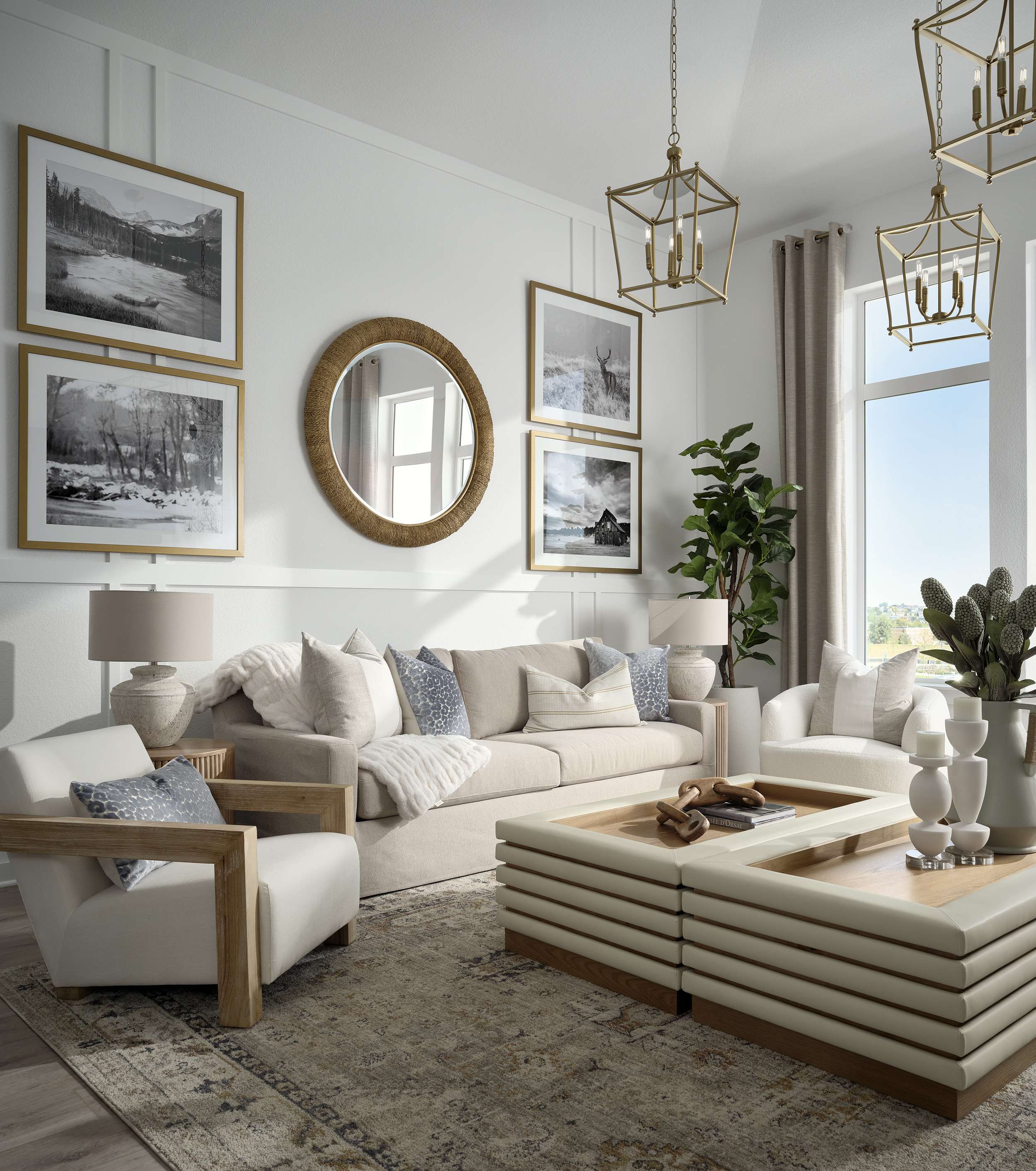
Why Model Homes Sell Emotion First (and Specs Second)
One of the most common questions we hear is deceptively simple:
Why does this model home feel so good?
The answer isn’t just great finishes or the right furniture layout. The most successful model homes are designed to spark emotion before a buyer ever starts comparing square footage, price points, or upgrade lists.
Here’s why that matters and how it works.
Emotion drives decision-making
Buyers may justify a purchase with logic, but they decide with feeling. A model home sets the tone for that emotional response the moment someone walks through the door. Comfort, aspiration, warmth, and familiarity all happen instantly and often subconsciously.
When a space feels livable, welcoming, and “just right,” buyers begin picturing their own lives unfolding there. That emotional connection is what keeps them lingering, remembering, and ultimately moving forward.
Design tells a lifestyle story
As designers, we are storytellers and every design choice in a model home should support a clear lifestyle narrative. From the way a sofa is positioned to how a kitchen island is styled, the goal is to help buyers imagine how they would use the space day to day.
It’s less about showing everything a home can do and more about showing what matters most to the target buyer. We aim to demonstrates how a home works best for their lifestyle. When the story is focused, the experience feels effortless
Details do the heavy lifting
Small, thoughtful details often have the biggest impact. Layered lighting that mimics natural rhythms, soft textures that invite touch, intentional sight lines that reduce visual clutter, and meaningful access to daylight all quietly shape how a space feels.
These elements work beneath the surface, creating a sense of calm, balance, and restoration. Today’s buyers are increasingly tuned into how a home supports wellness. They may not articulate it as such, but they recognize when a space feels healthy, grounded, and livable.
Specs come later
Once a buyer is emotionally engaged, the practical details fall into place. Floor plans, options, and finishes become confirmations rather than selling points. The design has already done its job.
That’s the power of a well-designed model home – it doesn’t shout. It resonates.
Up next: we’ll explore where design investment matters most – and where it doesn’t. Have a question you’d like us to answer? Send it our way
